
High-Speed Rail: The Mega Project Delivery Perspective
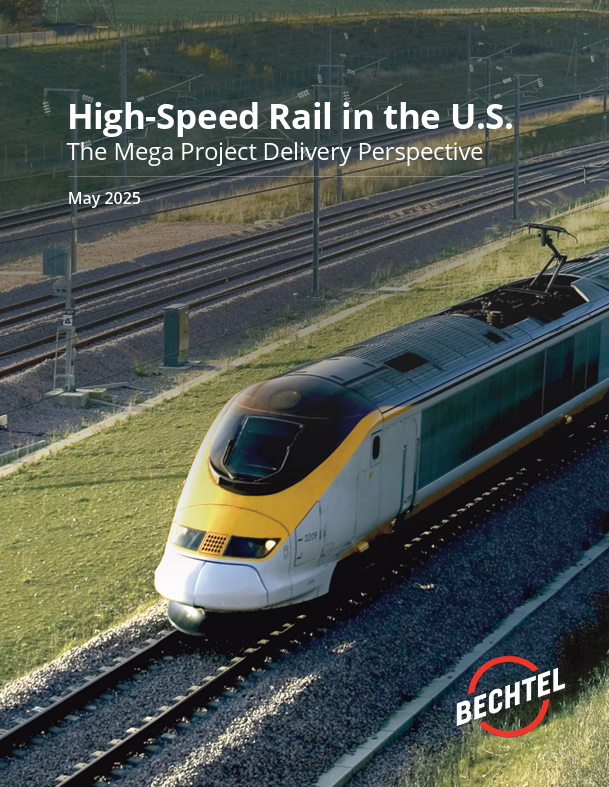
The large U.S. construction company, and USHSR member Bechtel has done an extensive study on what it would take to deliver a national high speed rail system in America.
The resulting report is a major milestone for the U.S. high-speed rail industry offering a clear roadmap for policymakers and project sponsors. The report lays out the key steps to jumpstart an American high-speed rail network.
What’s needed to make HSR successful in the U.S. is a bold, coordinated effort to transform how projects are delivered. Systematic program management, with the right structure, built-in accountability, will turn unrealized ambition into a ground-breaking national achievement. By drawing on proven lessons from countries that have delivered HSR, the U.S. can bring speed, and scale to its own network.
The case for HSR is compelling. Rail transportation is the lifeblood of vibrant regions and cities. It not only drives economic growth, creates jobs, and strengthens supply chains, it also advances global sustainability and carbon reduction goals.
And perhaps most appealingly, it improves quality of life. Per mile, rail is twenty times safer than driving. It also provides commuters with a faster, more affordable alternative to gridlocked roads and highways, increasing capacity across the broader transportation network and easing congestion. When we consider other countries enjoying the social and economic benefits of HSR, the opportunity for the U.S. is clear. In just 15 years, China has delivered over 27,000 miles of high-speed lines. Europe has more than 5,000 miles, Japan over 1,800, and Russia 800. Meanwhile, the U.S. has yet to build a true high-speed line. With the right investment, America can leapfrog outdated systems and deliver a network designed for the future.
The U.S. High Speed Rail Association (USHSR) has proposed one approach, a 17,000-mile, four-phase national HSR network that would revolutionize the country’s transportation landscape. This system is projected to create substantial employment opportunities, stimulate transit-oriented development, and drive economic growth.