
Congestion Relief

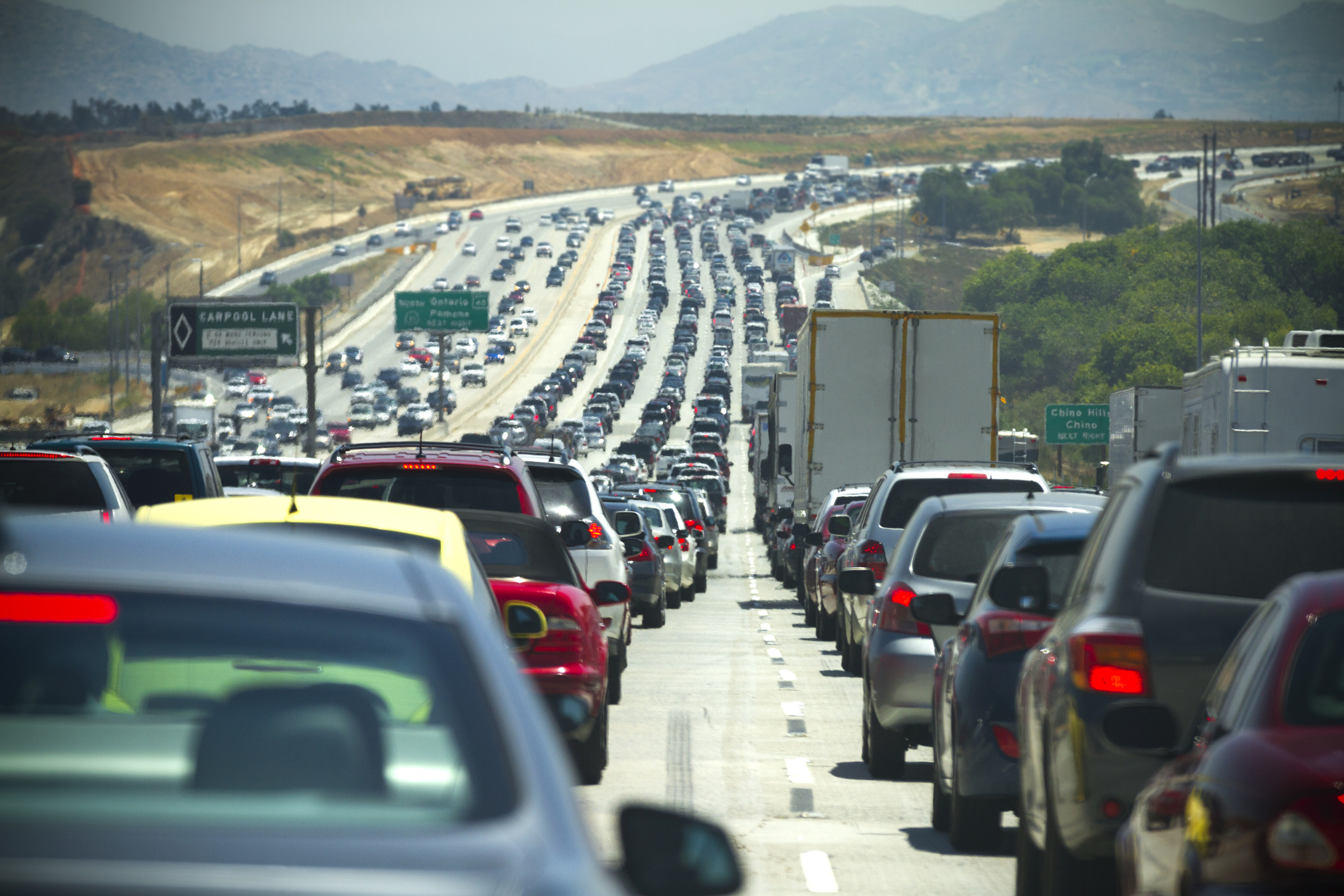
High-speed rail delivers real congestion relief by shifting millions of trips to fast trains. By freeing up room on the highways and runways, high-speed trains can make our entire transportation system work again.
Shifting more intercity trips to trains
Many high-speed corridors have shifted 80% or more of trips from planes to trains, which are faster, more direct, and rarely delayed - even by minutes. Airport capacity is freed up for longer-distance flights and door-to-door times are faster with most stations, unlike airports, located near city centers.
SOURCE: Science Direct
A standard two-track high-speed rail line transports more than 20,000 people per hour (10,000 in each direction) in a narrow corridor, using a relatively small amount of space. This has a domino effect, reducing congestion and improving traffic flow across the entire transportation system.
High-speed stations generate demand for dense, mixed-use, walkable communities that include a wide range of housing, shops, cafes, offices, hotels, community spaces, and more. Having all these things within walking distance reduces car travel and traffic congestion.
Direct and easy integration with regional and local rail and bus networks makes it easy for people to navigate to and from the high-speed station. Many can walk; others can use bicycles and scooters. New stations encourage the expansion of local and regional transit lines.
2%
20%
200 million
In California, high-speed rail is not an isolated project. It forms the backbone of a statewide rail plan that aims to reduce congestion by reducing vehicle miles traveled and encouraging travelers to shift more trips onto fast, clean trains. The plan calls for a 30% reduction in vehicle miles traveled from 2019 levels by 2045 as well as tenfold increase in rail and transit systems' share of passnger trips.
In order to maximize congestion relief, the California High-Speed Rail has been designed to integrate with local and regional transit services. The project will share a blended corridor with the Caltrain commuter rail system in the San Francisco Bay Area and the Metrolink commuter rail system in Southern California.
As the statewide system develops, more people can travel the full length of their journey without a car. The system will accommodate population and travel growth without having to add an equivalent amount of highway capacity.

%20(1)%20(1).avif)

%20(1).avif)