Alto High-Speed Rail
621 miles
186 mph
18 million
Alto will create a new passenger rail backbone for Canada's most heavily populated corridor - Toronto to Québec City - which has 17 to 18 million people and accounts for about 44% of Canada's population. The goal is faster and more reliable travel between Ontario and Quebec, increased rail capacity, economic development, housing access, and reduced emissions.
Alto will cut travel times roughly in half and offer service that competes with driving and flying. Work is in the pre-construction phase, focusing on technical design of an electrified network, tracks, stations, and supporting infrastructure, with environmental studies, and ongoing public and Indigenous engagement.
First construction will begin on the central segment of Ottawa to Montréal by 2029-2030 with phased rollout of the entire system over about 12 years. Alto will create more than 50,000 construction jobs, nearly $25 billion in annual economic impact, and will remove the equivalent of 100,000 cars from roads each year.
Toronto to Québec City
.jpg)
Frequently Asked Questions
Alto is one of the most advanced new high-speed rail projects in the world. It is well-funded and supported by the government but is still in the early stages with exact routes, station locations and construction financing to be determined. Cadence, a private co-development partner led by a subsidiary of La Caisse, a major pension fund manager, has been chosen to collaborate on designing the new system.
The current transportation system does not meet the needs of the region's growing population. High‑speed rail moves more people, more quickly and reliably, with fewer emissions than cars or airplanes. It relieves pressure on highways and airports, which are often at capacity, improves connectivity between major cities and promotes jobs and access to housing.
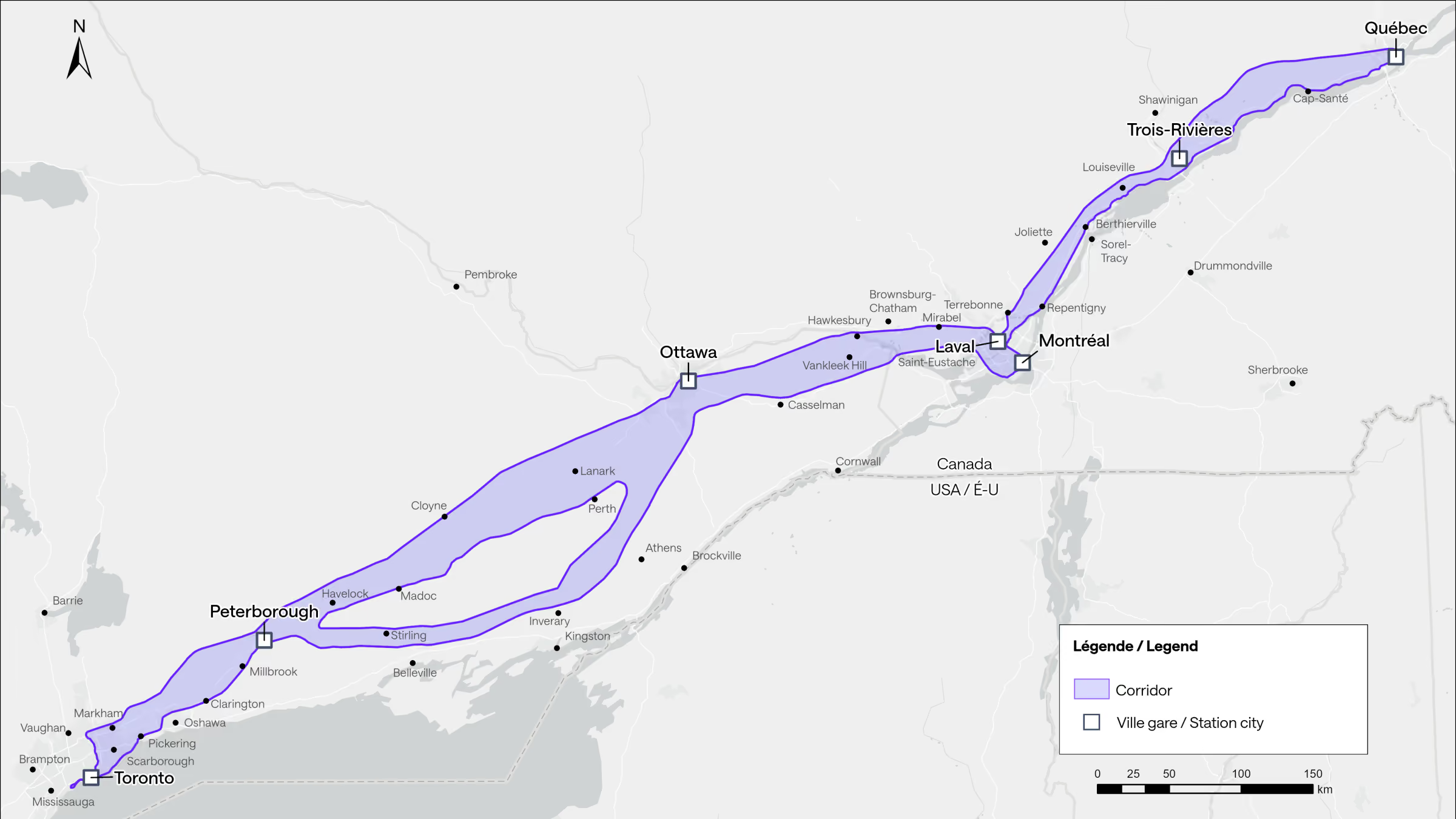
Exact alignment has not been determined but planning currently includes Toronto to Peterborough to Ottawa to Montréal to Laval to Trois-Rivières and terminating at Québec City. The 124 miles from Ottawa to Montreal will be the first segment to be completed.
Stations will be integrated with local transit, reflect the regional identity and, as Alto states, "be designed as extensions of living environments."
Most trip times will be cut in half with travel from Toronto to Montreal estimated at about 3 hours and Montreal to Quebec City in about 1.5 hours.
Current forecasts are for ridership to reach 24 million annually by 2055 depending on final route alignment, station locations, frequency and train capacity.

.avif)