California High-Speed Rail
494 miles
220 mph
Over 30 million
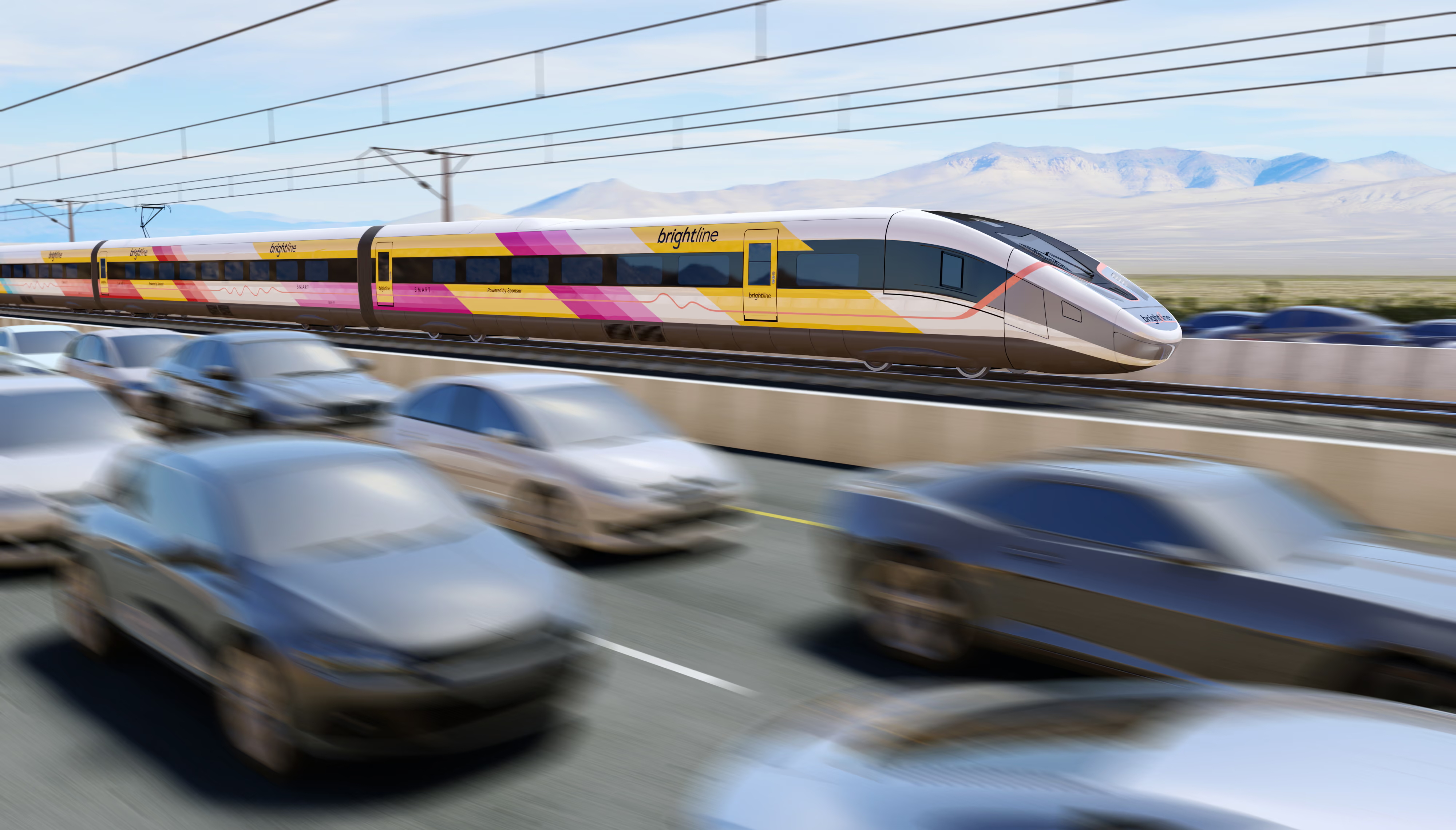
The California High-Speed Rail project is the first of its kind in the nation, connecting San Francisco and Los Angeles in under three hours. The fully electric, zero-emission system will form the backbone of a statewide transportation network that integrates high-speed rail with regional and local transit.
It will relieve traffic congestion and airport overcrowding, reduce air pollution, expand affordable housing, and connect the Central Valley to job centers in the Bay Area and Los Angeles
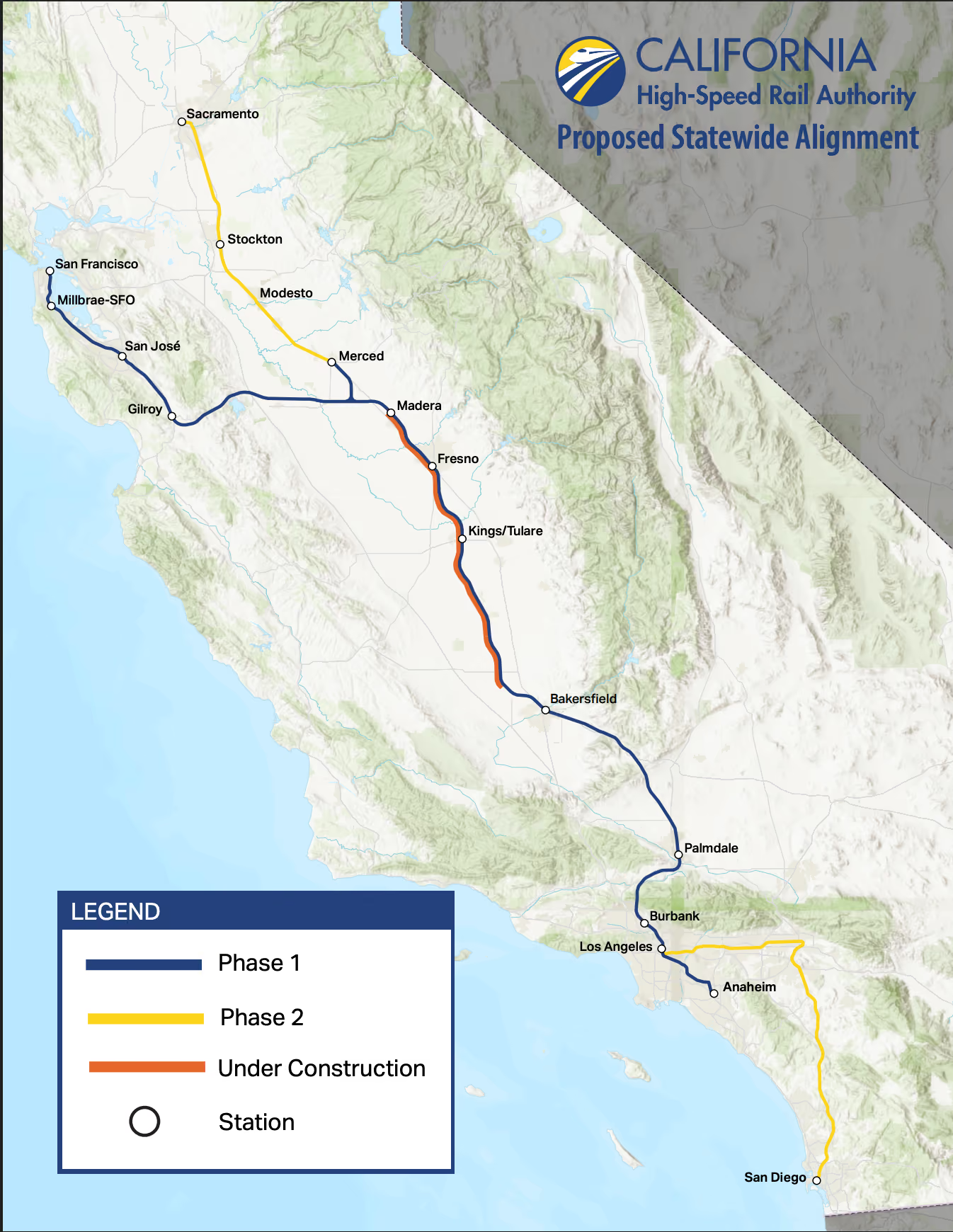
Construction is advancing on 119 miles of infrastructure in the Central Valley, with Phase I from San Francisco to Los Angeles extending 494 miles. Phase II will add 300 miles, reaching Sacramento and San Diego.
Transforming the Golden State
%20(1).jpg)
Frequently Asked Questions
California has made more progress in building a system than any other U.S. high-speed rail project. There are 119 miles under construction with tracks to begin being laid in 2026. The project has secured state funding of $1 billion annually for 20 years and chosen a co-development partner consortium to help plan future investment and expansion. It also supported the electrificaiton of the Caltrain line from San Jose to San Francisco in order to prepare for future high-speed service.
California High-Speed Rail has already created over 19,000 jobs in the Central Valley and will create thousands more. It has added about $27 billion in economic output and contracted with over 1,000 small businesses. When fullly operational, the solar-powered sytem will eliminate 500,000 metric tons of CO2 annually and take 400,000 vehicles off the road every year. It will enable workers to live where housing is affordable and commute to where the high-paying jobs are.
Express travel time from San Francisco is estimated at under 3 hours. Travel from Bakersfield to L.A. is 1 hour, 10 minutes, from Merced to San Francisco 1 hour and 30 minutes, and from Palmdale to Burbank it will take 20-25 minutes.
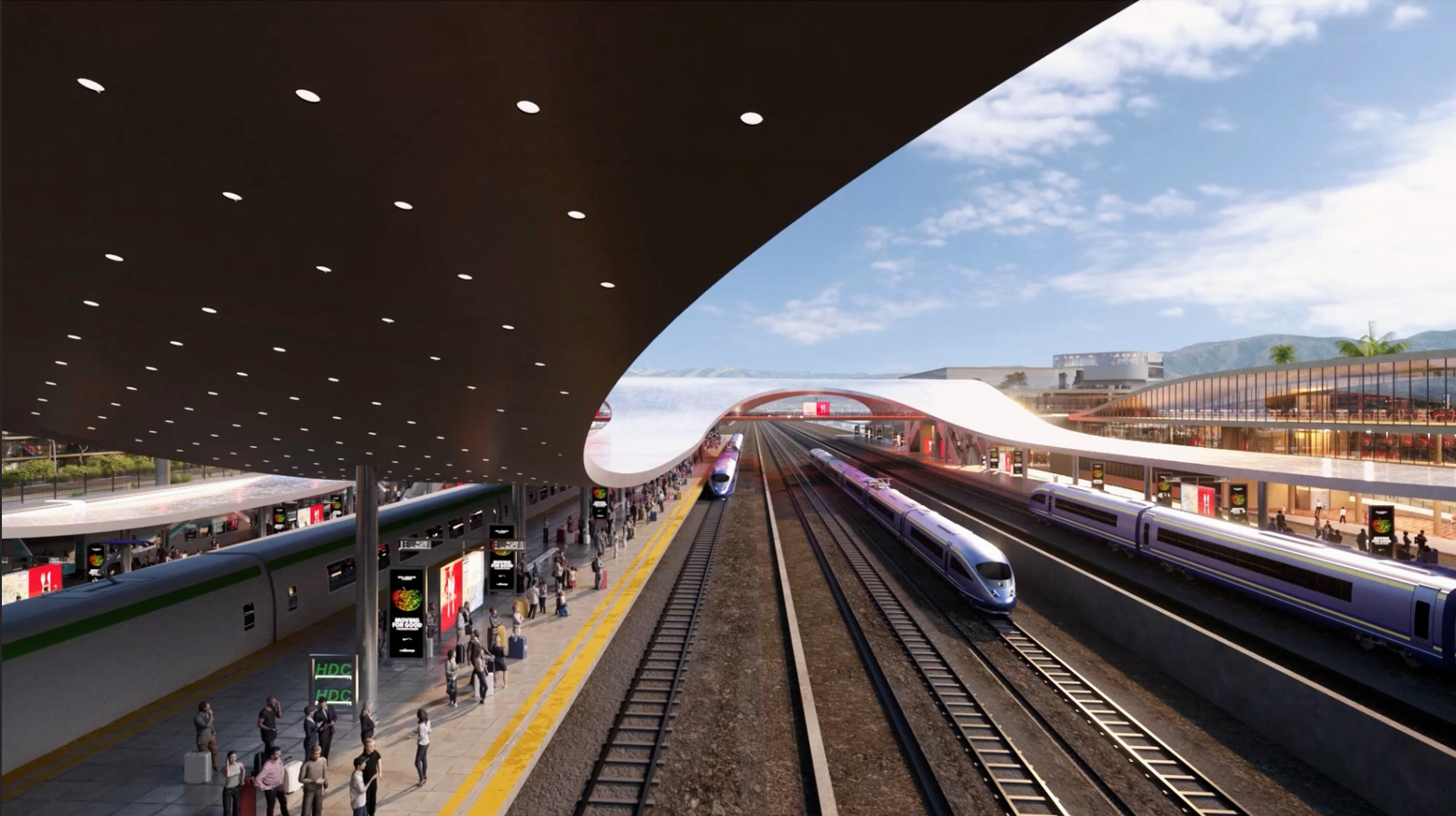
Development around stations will be a major driver of new housing and economic growth. Phase I stations are planned for: San Francisco (Salesforce Transit Center); San Jose (Diridon Station); Gilroy, Merced, Madera, Fresno, Kings/Tulare, Bakersfield, Palmdale, Burbank, Los Angeles Union Station) and Anaheim. There will be an express train from San Francisco to Los Angeles.
The California High-Speed Rail Authority projects Phase 1 ridership at between 23.8 million and 30.2 million passengers per year, Ridership for the initial service from Merced to Bakersfield is projected between 1.5 and 1.9 million passengers annually.