Texas Central High-Speed Rail
236 miles
205 mph
17 million
Texas Central will connect two major metropolitan economic hubs with high-speed rail that will be competitive with cars and planes. It will reduce traffic congestion, create a preferable alternative to driving, connect business communities in Dallas and Houston, drive economic development, and provide a much safer mode of transportation.
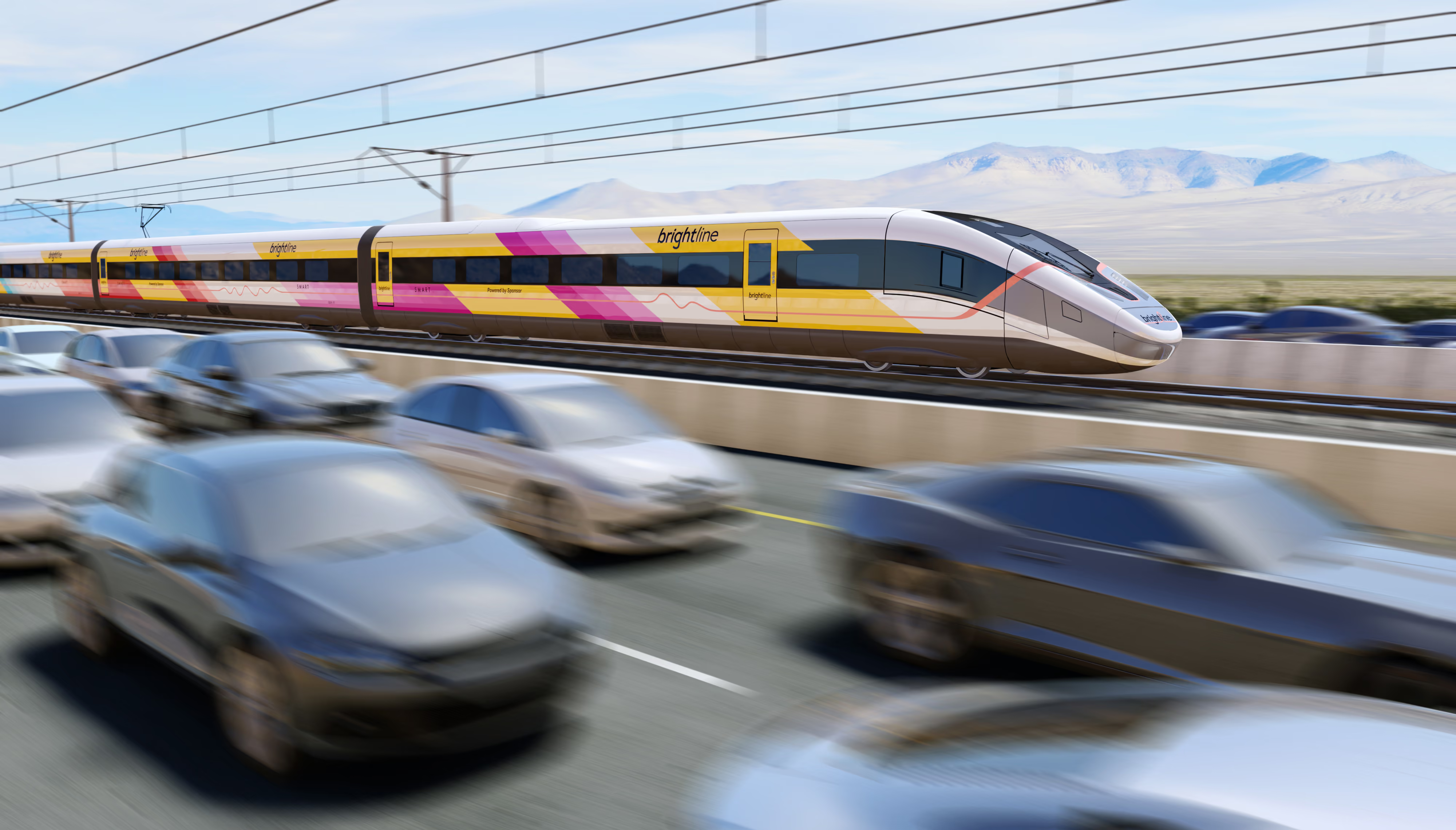
Texas Central will be based on the successful Japanese Shinkansen technology. The project is led by Fort Worth investor John Kleinheinz. Trains will travel at top speeds of 205 mph, connecting Dallas and Houston in 90 minutes, compared to 4 hours by car.
Texas Central represents a transformational investment in clean infrastructure, job creation, and innovation. It is expected to generate more than 17,000 construction jobs and $36 billion in economic benefits over 25 years. The line will serve up to 17 million people annually.
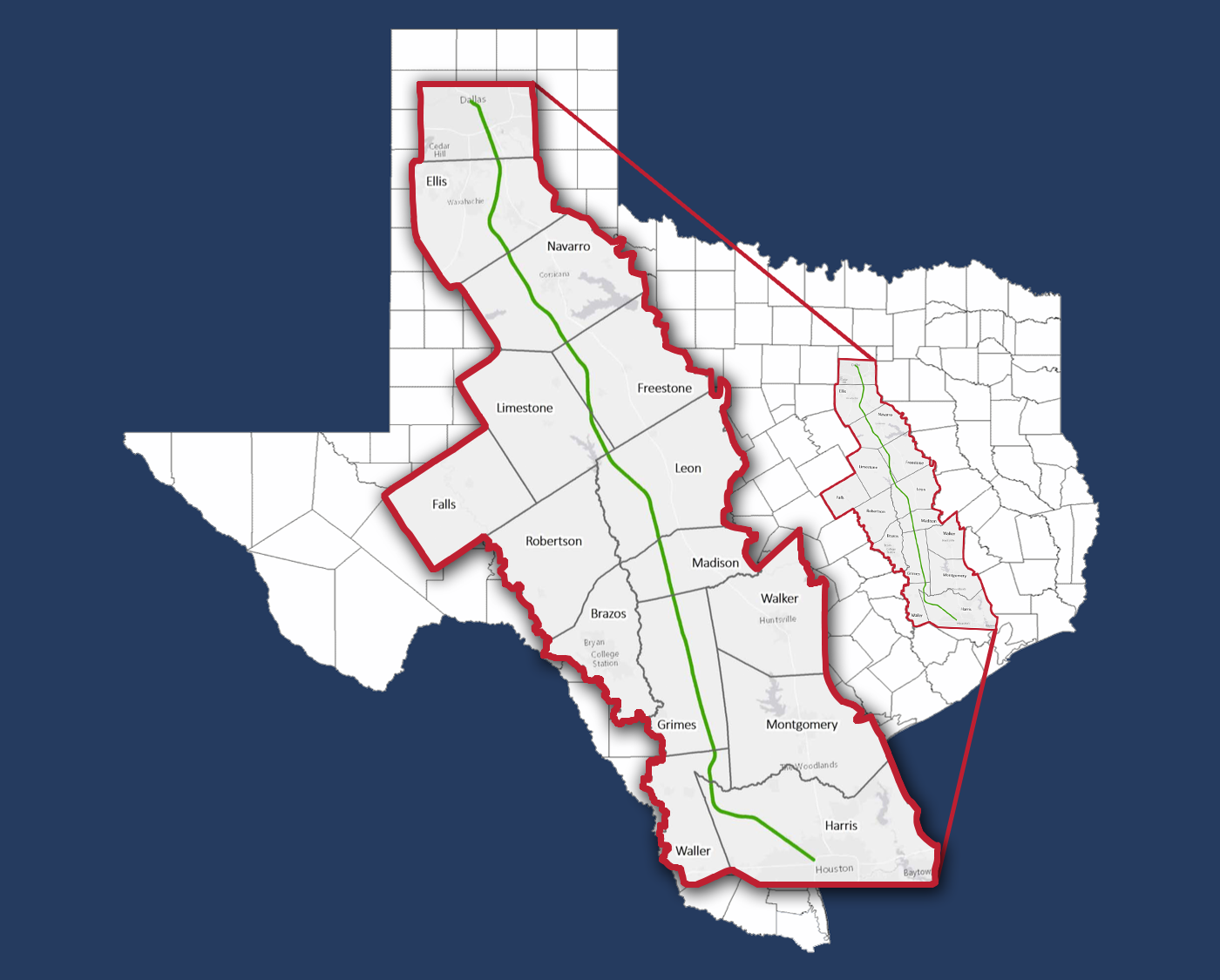
Connecting two Texas economic giants
Frequently Asked Questions
Considerable progress has been made. Environmental reviews are complete. The route is defined and station locations have been identified. A portion of the right-of-way has been acquired.
The next step is to secure construction funding.
The train will open up new opportunities for where people can live and work, while also creating fast, reliable access to sporting events, festivals and concerts, visiting friends and family, and more. The project will add billions of dollars to local economies, small businesses, and workers' paychecks. It will create more than 17,000 direct jobs during construction and over 20,000 supply chain jobs. It will reduce traffic jams, construction delays, and the stress of travel on standard roadways. Trains use energy-efficient technology that lowers carbon emissions.
Trains will travel 236 miles from Dallas to Houston in under 90 minutes and about 45 minutes to the Brazos Valley Station, which is approximately midway between the two major urban centers.
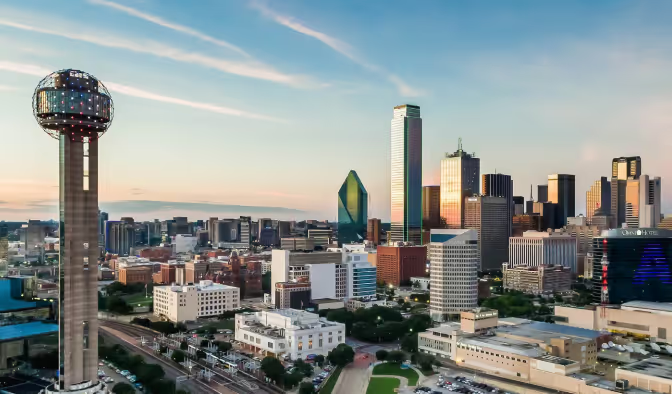
Three primary stations are planned: downtown Dallas, with connection to the North Texas multimodal transportation system; in the Brazos Valley on about 60 acres between College Station/Bryan and Huntsville; and in Houston in the Northwest Mall area the US 290/I-610.
Texas Central estimates that about 17 million people live within the train's service area. Ridership is projected to exceed 6 million passengers annually by 2029 and more than 13 million by 2050.